
5 posts tagged with "Security"

View All Tags

TAD3: Empowering Investors with the SDEX

· 9 min read
John Wooten

Prerequisite Reading: Syndicate Update #1. TLDR: The Stellar Decentralized Exchange enables TAD3 trading.

Direct investor trading is a symbol of financial liberation. It's about breaking down barriers and democratizing finance. And in this blossoming ecosystem, each of us has the potential to grow our investments on our own terms. It's a vibrant, bustling market where anyone with an internet connection and a government ID can participate. No longer confined by the walls of traditional exchanges, direct trading hands the reins of the market back to its rightful owners—the people.

Global impact of P2P equity trading

The Basics of Direct Trading

At its heart, TAD3 is about simplicity and connection. It's the financial equivalent of a farmers' market, where producers and consumers interact without a supermarket acting as a go-between. This translates to a system where individuals like you and me can trade securities directly with each other, without a traditional broker setting the terms or taking a slice of the pie.

Exempted Transactions

Now, you might wonder, how is this all possible? Well, it's thanks to federal trading exemptions for anyone other than an "issuer, underwriter, or dealer." Imagine the process as if you're handing over a prized painting to a friend. You have a "painting certificate," a tangible representation of your investment. Instead of going through a centralized dealer gallery, you and I sit down to make a private deal. On our own behalves, I agree to wire you money directly, and you sign the Van Gogh over to me. There's a sense of satisfaction in handling the transaction ourselves, without intermediaries. That's TAD3,powered by distributed ledger technology.

Efficient Secondary Markets ↔

Picture this: Miguel, an early investor in an innovative manufacturing startup, can sell his shares to Sarah, a retired scientist, without jumping through the hoops of traditional systems. They find common ground in TAD3, a beacon of efficiency with no trading fees nibbling away at their finances.

TAD3 Principles

Just as artists trust galleries to distribute their paintings, companies use transfer agents to manage their stock. There's just a smidge more compliance work on the securities side. That's why only a few companies in the entire US market act as their own transfer agent,in fear of sub-par services. TAD3 is like a public, global digital archive rather than a physical gallery on Wall Street, only for a special few. Stellar holds detailed records of every transaction, maintaining a distributed ledger that's as clear and reliable as a museum's catalog (and don't forget programmatically accessible ).

TAD3's Non-Intermediary Model

TAD3 acts as a silent witness rather than a vocal auctioneer. TAD3 don't stand between buyers and sellers, shouting out bids and offers. Instead, Stellar enables transactions directly between investors, much like a bulletin board in a community center where people can pin up offers and requests. (Don't worry, we have systems in place to enforce SEC trading halts.) This means that TAD3 does not profit from each transaction, but rather it allows us to facilitate the smooth transfer of ownership from one investor to another. You could think of the decentralized Stellar network as a librarian who organizes books for the depository, TAD3.

Advantages

When TAD3 don't take a cut, the savings are passed directly to your savings and retirements. Imagine keeping every dollar you earn from selling tomatoes in your backyard garden instead of paying a vendor fee at the farmers' market. This is the financial equivalent. By not charging fees or acting as middlemen, TAD3 empowers investors to keep more of their profits, which can then be reinvested or spent as they see fit—the ultimate financial freedom. Moreover, this streamlined approach creates a more dynamic market, where securities change hands more freely and efficiently.

"Atomic Swaps" Make This Work

Atomic swaps let you trade with no middlemen. They are a revolutionary piece of blockchain technology using math and the foundational principle behind the SDEX's global decentralized limit order book. Offers are "atomic" because either a trade happens in its entirety, or not at all. This eliminates counterparty risk, which removes the need for a centralized clearing system entirely.

Facilitating Trustless Trust

Atomic swaps are a cornerstone of direct trading in TAD3. By using automated, decentralized protocols, the SDEX lets investors privately trade securely at scale in a way never before seen. This approach streamlines the trading process, reduces dependency on third parties, and (importantly) removes transaction fees that would otherwise go to intermediaries.

The Stellar Consensus Protocol underpins these transactions, ensuring they are fast, reliable, and tamper-proof. It's like a global farmers' market where companies can send crops to investors in exchange for payments, all through one email. The distributed network checks for fair trade conditions before finalizing all transaction. Seamless, secure, and nearly instant swaps—that's TAD3.

A Unique Network

The SDEX is part of the actual Stellar core protocol. Most DEXes (if not all other than 0x ) rely on smart contracts, external service providers, or secondary layers for trading. Stellar's direct integration cuts out common security risks associated with those additional systems and provides a transparent, efficient trading experience.

Regulatory Compliance

Based on extensive legal investigation, securities trading systems using those additional technologies would today be classified as Alternative Trading Systems, which must be registered with and regulated by the SEC (example ATS which presently charges 1% trading fees).

Because they're centralized, ATSs can and do discriminate based on traditional access methods. It’s essential to establish a fair and equitable system that provides equal opportunities for all investors, aligning with the ethos of decentralization and inclusivity that blockchain advocates. That doesn't happen when brokers require a US social security number because they can't bother with an international "low-value" user's government ID, or transfer agents require a medallion stamp.

Moreover, ATSs are "black boxes," which means you can't actually review how they operate. Investors have to rely on regular thorough broker investigations to ensure fairness, which gets quite expensive. Take a guess who those compliance costs get passed on to. Further, regulators can only act so quickly when it comes to the 49 ATSs in operation today. This oversight process can and does go wrong, at the expense of investors.

Despite illegality, stock exchanges and ATSs by ownership extension sell faster trading data to HFTs. That means that market makers can know the price of a stock up to three or four seconds before you. Remember, these exchanges are all for-profit corporations with shareholders to satisfy. Investor advocate Mark Faulk says:

" When the Exchange went from not-for-profit to for-profit...

the utility function of the marketplace of the exchanges disappeared.

Because once you... flipped the switch to make these exchanges, not utilities,

but for-profit vehicles, now you have shareholders to answer to... and obviously the largest customers are the HFTs. " We need to level the playing field for all investors, regardless of their trading frequency or volume.

Transparency is key in a new, trusting financial system. We shouldn't need to worry about when our broker is trading against us. Clear, auditable processes must allow users to understand how their trades execute—that's TAD3.

Lastly, for the finance geeks, all these different ATS trading venues split volume apart, segmenting the entire stock market. The implications and costs of this practice are very difficult to quantify, but they dramatically affect your investment returns over time. ⌚ This leads to higher spreads, a fragmented view of transaction history, and other problems detrimental to ' smarter markets.' A unified, or at least interoperable, recordkeeping system could eliminate this fragmentation. Not one controlled by a private for-profit monopoly.

The Takeaway

There are a lot of very smart people working on the problems TAD3 solves. For instance, we spoke to a co-founder of the first widespread decentralized order book platform, launched in 2018. The system was built on extremely innovative P2P file-sharing technology, with transaction costs originally starting between 50 ¢ to a dollar. They got a knock on the door very early on since they'd processed millions of trades almost immediately after launching. For regulatory reporting, they told us you had to scan through dozens of Ethereum ledgers to find a certain kind of specific trading code signature to match a nuanced distributed data/ math scheme. That's impossible to conduct efficiently at scale or effectively oversee.

"Someone needs to build a unified system for trading," has been heralded for decades by market advocates,researchers, and investors alike. That's why we built TAD3.
Syndicate Update #1: Introducing TAD3

· 13 min read
John Wooten

Team Members: 1

Payroll Annualized: $0

This is something from the origin story of DRS.

The Dr. Trimbath interview with No Safe Bets brings up:

In 1971, there was a group called the Banking And Securities Industry Committee...

These BASIC bankers got together and argued against creating something called

the transfer agent depository which would have given us direct registration back in 1971.

But instead, we were given the Depository Trust Company. — Bibic at WhyDRS.org ↗

Prerequisite Listening: Direct Registration System Provenance. TLDR: Wall Street gets all your money.

According to the U.S. Securities and Exchange Commission: The transfer agent depository ("TAD" ) would replace the certificate with computerized stockowner lists... which would serve as both the issuer's stock records and the shareowner's evidence of ownership.

SEC commenters supported the TAD. They thought the only investors should be registered investors (not interchangeable with book entry ). They wanted a world without a convoluted, oligopolic, and opaque trading system.

Beginnings

Block Transfer started at an online Atlanta Web3 hackathon. I was trading international forex markets 22 hours a day at the time, using polyphasic uberman. I needed to do a "restart" because I decided to get a full night's sleep for finals. That meant staying up for 36 hours before starting my revolving 20-minute naps.

I think the exam was on a Wednesday, and the hackathon was the coming weekend. So I started the extended wake period 35 hours before the hackathon's closing ceremony. The hackathon was great, and it resulted in our first Block Transfer implementation

Soon after, we were graciously thrust into Georgia Tech's InVenture Prize. Ever since the campus guide told me about the event during a high-school visit, I'd wanted to present. The process also introduced us to a key early advisor.

Preparation for the competition included three rounds of pitch competitions, the latter two to a panel of judges. After qualifying for finals, we went through dozens of pitch practice session with those judges, each time narrowing my idea down.

Around the same time, I also applied to other college student business pitch competitions. I further refined my idea here, and even won $5,000 from Entrepreneurs' Organization and $2,000 from US Bank.

All this pitching made me very focused on money. Combined with bona fide prodding from mentor sessions during Tech's CREATE-X Startup Launch program, we tried to close our first client in the summer of 2021 with an improved Ethereum implementation.

Talks went well with that CFO, but cost savings alone weren't enough to drive a close with this level of implementation. I'm thankful for that, looking back. I think it would have been two months tops before we got an SEC non-compliance letter, if we took on the firm.

I realized that gas costs for a stock transfers on Ethereum would be at least $10 each, and significantly more for trades. To fix this problem, we planned to scale the Ethereum implementation with "level 2" daily transaction batches, using Arbitrum.

But any netting would facilitate counterparty risk (albeit less so with crypto) and, more importantly, slow down clearing to T+1:(## TAD2

So we set off looking for another blockchain. I settled on my three most important network considerations after considerable protocol analysis, comparisons, and brainstorming: (in order of importance)

  1. Cost: Cost per transaction is and always will be a number one value metric for me. Per-trade costs directly impact investor returns. They are the one thing we can directly control to facilitate building real savings and retirements for masses of people.

  2. Speed: I come from day trading. I regret sacrificing joyful instantaneous trading and limited market hours that squeeze most US volume from 9am to noon. But markets were originally given trading hours due to lack of buyer interest. That's not a problem in an increasingly global world with better online connection than ever.

  3. Impact: We were unbelievably surprised to learn that Stellar cared so much about comprehensive global inclusion. I first learned about Stellar in 2017 when I bought its nature currency at $0.035. I've always felt excluded from the financial system. When I was a pre-teen, I built an RPG with a video game maker. When publishing onto Steam, they asked for my bank account and routing numbers. When I asked my parents, they wouldn't share the details because "people will steal your money." Talk about trusting the financial system. Without much leverage, I moved on and eventually got my first job at Subway. I have them to thank for the muscle memory to grab things behind me without looking. My manager wasn't the nicest guy. I was okay with that because they were letting me work illegally at 15. But a lot of pressure started mounting after about a year there, when so many of my coworkers left that I was working open to close completely alone. I decided that the only way to take control of my financial future was to take it into my own hands. For the next six months, I spent every waking hour outside of work or school researching the stock market. I even made my first few investments. I had losers, some decent investments in NVIDIA and AMD, and a few stocks in-between. When summer rolled around, I turned in my two-week notice. I quit my job to trade stocks full-time. Just one small problem: I didn't have a brokerage account. I did all my initial testing with my Dad's broker. But he didn't live with me, plus his broker didn't have a very good trading interface. Luckily, my Mom set me up with her Fidelity. Sadly, my home relations were not great at the time. Every morning I had a problem logging into Fidelity, which was surprisingly often, I had to either disrupt my Mom's conference calls or watch hopelessly as the market ripped away without me (I didn't know about UTMAs at the time). But at the end of that summer, I discovered Ethereum. A solution, I thoughtI spent the rest of the year trading the same technical analysis patterns in crypto—no age verification required. Imagine that Web3 experience, but for any modern financial institution—and especially for US stock brokers. Think about what your world would be like without quality, accessible investment opportunities. Would you still save for retirement? It's a lot harder without the miracle of compounding. That's a daily reality for over 7 billion people, many of whose best investment option is a metal roof or deadly weapon. What if we gave them access to the most advanced, developed, and liquid capital market the world has ever seen?

Stellar also has some other pretty cool things, all built directly into the protocol level. That means you don't need to write a smart contract for any of our current features, which historically introduce significant security risks, even for the best teams.

That background was up to 2021. I spent the next two years learning to use Stellar. Personally, I never thought I'd code. I remember during my first blockchain startup thinking, "I'll never need to learn coding. I'll just hire developers with all the money I'll make trading stocks." I seriously doubt we'd be here today if I did outsource to a development team early on. Thankfully, good smart contract developers were too expensive for me at the time, so I learned how to code at Georgia Tech.

Launch

We got our inaugural client in June, finished processing SEC registration papers for them in July, and started onboarding their investors upon receipt of a final cap table in September. We've onboarded 6 investors out of the 25 provided. There is currently a pending stock revocation for 12 investors the company claims do not actually own shares.

When this client first reached out to us, we thought they were a relatively large marketing company. But it turns out they are a small business—which is fine! Markets and stock ownership records 100% do need to exist for all businesses. If you plan to scale your business, it's very important to get your stock accounting right from day one. I've heard nightmare stories of VCs finding out three investment rounds later that they actually own another 250,000 shares per an early contract. Notwithstanding, they haven't yet paid us any communicated fees aside from an ~7% equity stake. They told us that this was due to lack of funds on a call dated 23 Oct 2023.

Next

If you visited the last link, then you saw the actual transaction I was talking about when I mentioned our equity stake. It was a payment of 5 million shares from our Stellar "distributor account" to our treasury account. If you looked closely you can see the amount we paid for the shares in the memo and the "claimable" date we elected internally to not transfer our shares until, to both align our incentives with their long-term objectives and prevent us from dumping shares on their developing investor-base.

That's the power of Web3. Anyone can confirm information about a stock without worrying about expensive level 2 access fees, data platform access fees, or specialized market information consolidators. You can just reference the blockchain for all your needs in real time. And the transaction, which executed in about 5 seconds, cost only 0.0001 XLM, or $0.0012 today.

TAD3

That's just the tip of the iceberg for what we're calling our "Web3 Transfer Agent Depository" or TAD3 for short. We've conducted extensive due diligence on the regulatory implications of TAD3. Despite presenting our system to even the most executive individuals at or formerly at the Securities and Exchange Commission, we've concluded that TAD3 falls outside of the current, relatively limited set of regulations on legacy transfer agents. We've always been registered as a transfer agent with the SEC, but we're happy to change filer types if the SEC thinks TAD3 should be explicitly classified as the transfer agent depository.

One particularly important aspect of TAD3 is the ability for registered investors to trade with each other through Stellar's native decentralized exchange, the SDEX. Block Transfer conducts KYC/AML checks for all accounts. The SDEX lets these investors trade TAD3 assets on a global, decentralized limit order book. Under the hood, investors use cryptography to sign bid and ask quotes which get stored on the blockchain and matched every ledger based first on price and then time.

We continually monitor all accounts for suspicious transfer or trading activities. With that said, it's worth explaining a little bit about what accounts look like in TAD3. All Stellar accounts get identified by a "public key" that looks like "GDRM3MK6KMHSYIT4E2AG2S2LWTDBJNYXE4H72C7YTTRWOWX5ZBECFWO7." Those public keys aren't very easy to share, so we give users a random permanent account ID that looks like BIYES3WTN. On the backend, this resolves to the full public key. If you visited the equity transaction link, then you might have noticed that the two accounts mentioned are identified on the ledger by their public keys. Those public keys, and thus their associated transactions, are the only user information stored on the blockchain.

It's worth pausing for a moment to talk a little more about Stellar.

Brief Stellar History

Stellar went live one month after Ethereum in 2015. The SDEX has been there since day one.

The team behind Stellar split from Ripple in 2014 because they wanted to focus on empowering global citizens to access financial markets, not profiting from big banks (the article linked was originally titled "Jed McCaleb: XRP and XLM Visionary or Disaster Artist?" ). This decision shows in every aspect of Stellar.

In contract with other truly decentralized blockchains, Stellar does not distribute transaction fees or any other compensation to miners or validators, thanks to its unique consensus protocol. This keeps transaction costs down.

Stellar can currently process up to 1,000 transactions per ledger. That lets investors pack the blockchain with as many stock gifts, buy offers, or proxy votes as they can click away on their phones at once.

Lastly, Stellar is incredible dedicated to global financial inclusion. There are immense benefits to opening US investment markets to the world, direct foreign markets to Americans, and everything in-between (e.g. more eyeballs on stock tickers). TAD3 fundamentally connects a growing capitalistic world with a fair market for capital. We envision a future where, after proper SEC filings, a company can "go public" through an SDEX sell offer (most investors don't know that "being public" really just means that you report timely financial statements to the SEC). That why we connect investors and issuers with a standardized nonprofit global financial system.

We Will Comply

The SEC is well within their rights to ask for programmatic access to our internal records to resolve a suspicious public key to its full internal PII record. We will grant them access to such a system, not unlike the present CIP. We built TAD3 to help investors for their entire investing career from start to peaceful bequeathment. Our general approach so far has been modeling the Syndicate based on the past 100+ years of broker regulations. TAD3 will either comply with all future transfer agent regulations, or we'll help build them ourselves.

Sources

SEC Report on Transfer Agent Depository

Read Next: Empowering Investors - Learn how TAD3 enables direct trading with zero banks, brokers, etc.

OFAC 'Bans' Russian DeFi: Increasing Importance Web3 Regulatory Compliance

· 4 min read
John Wooten

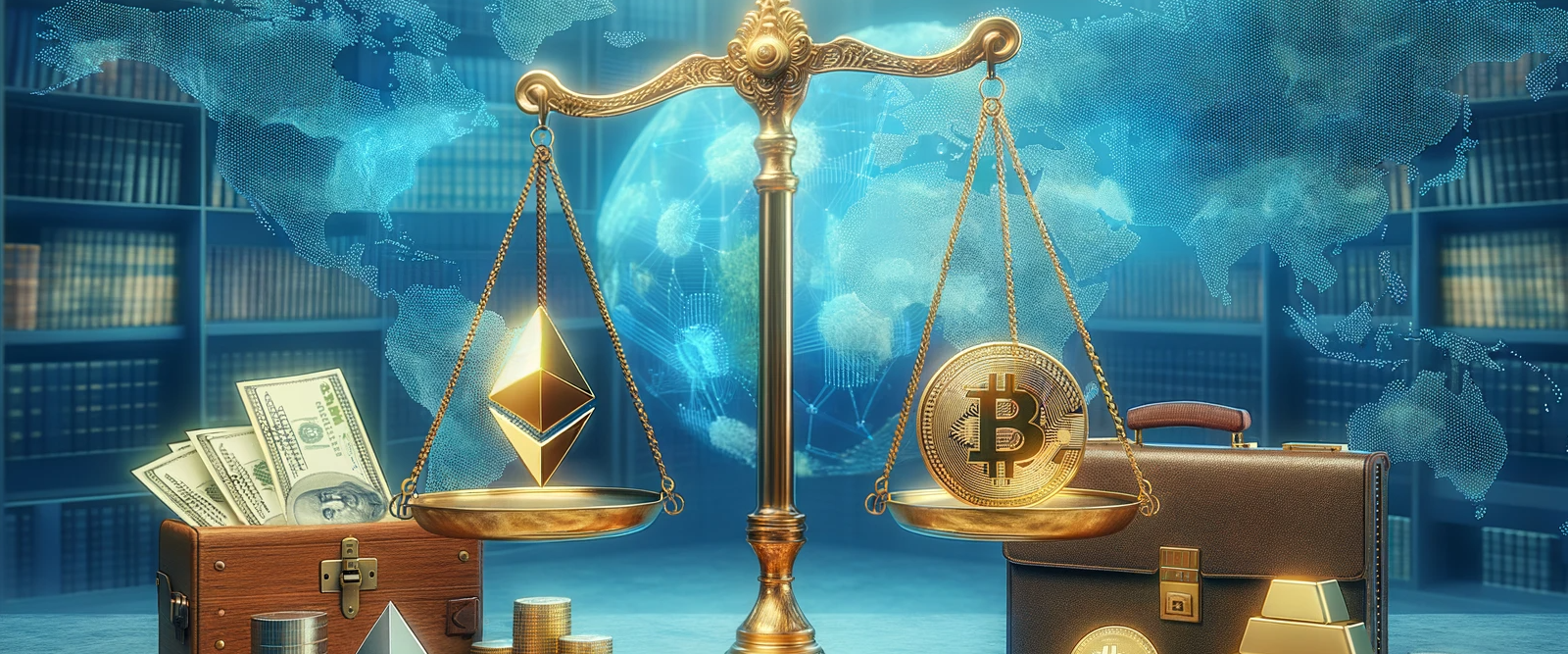
Realistic golden scale of justice, perfectly balanced in the center of the image. On the left plate of the scale are finely detailed representations of traditional finance: crisp dollar bills, shining gold bars, and a sophisticated leather briefcase. On the right plate, symbols of the blockchain world are displayed: a 3D-rendered Bitcoin, a tangible Ethereum coin with its iconic logo, and a luminous digital cube. In the background, a soft, semi-transparent world map overlays, symbolizing the global implications of finance. The composition is set against a modern blue hue, encapsulating the harmonious blend of the old and new financial worlds.

Two days ago, WalletConnect restricted its availability in Russia in response to new legal and OFAC guidelines. WalletConnect, for those who aren't familiar, is a linchpin in the Web3 ecosystem. It's a crucial bridge that allows for seamless interactions between decentralized applications and personal crypto wallets.

The update has broader implications than just affecting Russian users—it's sending ripples through the Web3 and financial spaces. T his situation is a perfect example of how Web3 innovations and regulatory preparedness intersect—and why it’s more crucial than ever to be informed and ready.

Financial Markets and Web3

In the traditional financial world, regulations are stringent, and for a good reason. They protect investors, maintain trust, and ensure the stability of capital markets. Web3 projects, especially those related to decentralized finance, are challenging the status quo by democratizing access to financial instruments. But with great power comes great responsibility—and that includes adhering to regulations designed to promote global stability.

Non-compliance can result in hefty fines, legal disputes, and can even spell the end for your project. I've seen projects go from hot to not overnight (and vice versa ) because they ignored or underestimated compliance requirements. It's a reality check that comes in hard and fast.

Regulatory Compliance?

In the early days of the internet, it was pretty much the Wild West. No one was quite sure what the rules were, and innovation took precedence over regulation. Fast forward to today, and you'll see that Web3, the decentralized internet built on blockchain technologies, is in a similar boat.

Regulatory compliance is not just a buzzword; it's an essential pillar for the sustainability of any Web3 project. It's the guardrail that keeps us from falling off the proverbial cliff of legal ramifications and provides a framework to operate ethically and responsibly.

What's at Stake?

The ability for Web3 projects to interface and integrate with traditional markets largely depends on compliance. If DeFi projects, for example, are to ever become a recognized alternative to traditional financial systems, they need to play by some ground rules. If not, we're looking at isolated financial ecosystems that can't maximize their reach or impact.

A Personal Journey Through Securities Regulation

At Block Transfer, we never considered regulations as an afterthought. Far from it! I actually began my journey into the transfer agent world through an old classic: The Transfer of Stock published in 1929 by Francis Christy. Yes, you heard that right—1929!

The New York Times hailed it as the “authoritative book on how corporate stock transfers are made.” This book was my gateway into the fascinating world of securities regulation. From there, over the course of years, I read every piece of federal US securities regulation, understanding that any innovation we drive must be compliant and reliable.

Closing Thoughts

The WalletConnect situation showcases the complex relationship between Web3 technologies, regulatory compliance, and traditional financial markets. Web3 projects have the power to revolutionize not just how we interact online, but also how we deal with money, assets, and financial instruments. However, without proper regulatory compliance, we risk creating financial bubbles, harming investors, and missing out on creating something genuinely transformative.

Regulatory compliance may not be the most glamorous aspect of running a Web3 project, but it's definitely among the most important. Legal frameworks around investing are continually evolving. WalletConnect's recent update is a sign of how much external factors like government regulations can affect the Web3 landscape. We have to be prepared for these changes as they come. If you're a blockchain company with over 35 investors, we can make your shareholder compliance life easy.

Sources

WalletConnect Protocol Update Email

Inclusive Web3 Proxy Ballots: Democratizing Traditional Shareholder Voting

· 12 min read
John Wooten

If you've ever owned shares in a corporation, you've likely been invited to have your say in important company decisions, from electing board members to approving mergers. While this sounds straightforward, the reality is far from it.

The traditional proxy voting system is a maze of paper ballots, phone calls, and centralized control numbers that can leave even the most diligent shareholder scratching their head.

image Why does this matter? Because shareholder voting isn't just a formality; it's a pivotal aspect of corporate governance that directly impacts your investment. The voting process gives you the power to influence management decisions, potentially boosting stock performance by tapping into the collective wisdom of a diverse investor base. But what if this system, designed to give you a voice, is so flawed and cumbersome that it effectively silences you?

Deep challenges and inefficiencies plague the traditional proxy voting system. But what if there was a way to not only simplify this convoluted process but also make it more democratic?

The Quagmire of Proxy Plumbing

"Proxy plumbing" may conjure images of a home improvement project, but it's actually a term that encapsulates the complex and often inefficient system of shareholder voting. It refers not only to the maze-like distribution of proxy materials—those vital documents that empower shareholders to vote on key corporate issues—but also to the entire vote collection process. This "plumbing" is intended to channel your voting power seamlessly into corporate decision-making, but it frequently experiences leaks and blockages along the way.

This system is rife with inefficiencies such as over-voting, empty voting, and a lack of vote confirmation, among others. These issues not only make the voting process cumbersome but also cast doubts on its integrity and inclusivity. The end result? A diluted shareholder voice and a missed opportunity to effectively influence corporate management.

Bank of America counted 130% of its shares voted...

they received 30% more votes than they had shares outstanding.

That‘s just the number of people who actually voted their shares!

Imagine how many shares were sold beyond what they actually authorized and issued. This violates the voting rights of shareholders and reduces effective corporate governance.

— Lucy Komisar

This system is rife with inefficiencies such as over-voting, empty voting, and a lack of vote confirmation, among others. These issues not only make the voting process cumbersome but also cast doubts on its integrity and inclusivity. The end result? A diluted shareholder voice and a missed opportunity to effectively influence corporate management.

The Phone Fiasco

Imagine this: You've just received a notification that it's time to cast your vote on important corporate matters for a company you've invested in. Eager to exercise your shareholder rights, you decide to vote by phone, thinking it'll be quick and convenient. You dial the toll-free number provided and brace yourself for what should be a straightforward process.

But then, you're greeted by an automated voice system that seems to have been designed in the pre-internet era. The menu options are confusing, and you find yourself pressing the same numbers repeatedly, hoping to get to the right place. After several minutes of navigating this labyrinth, you're finally connected to a human operator.

You'd think this would make things easier, but no. The operator rushes through the voting items, barely giving you time to understand the issues at hand. You find yourself asking them to repeat the options, only to be met with audible sighs of impatience. The potential for errors is high, and you start to question the integrity of this voting method.

Finally, after what feels like an eternity, you cast your vote. But even then, there's no real confirmation that your vote has been accurately recorded. You hang up the phone, feeling more frustrated than empowered, wondering if your voice will even be heard.

The Paper Chase

You're an investor who's just put money into a promising company, excited about the potential returns and the chance to have a say in corporate decisions. Then, one day, a hefty envelope lands in your mailbox. You open it to find a stack of papers, including the definitive proxy statement, which outlines the items up for a vote at the upcoming annual shareholder meeting. Alongside it, you find a comprehensive annual report from the issuer, filled with financial statements, executive summaries, and other disclosures.

You're not alone in receiving this "full set delivery" of materials. The company, often through a transfer agent, has sent out similar packages to all shareholders. The environmental impact of this paper-heavy process is staggering. Reams of paper are printed, and the carbon footprint of the mailing process is significant.

You spend the next couple of hours diligently filling out your ballot. After all, this is why you invested—to have a say in the company's future. You seal the return envelope and drop it back in the mailbox, but as you do, a nagging question remains: In an age where almost everything is digitized, why is the proxy voting system so stuck in the past? Why does it feel like your voice is being muffled by an outdated, inefficient process?

In all reality, t here's no guarantee that your vote will be accurately recorded or even received. Costly paper ballots can get lost in the mail, miscounted, or arrive past the deadline, effectively nullifying your vote.

Control Number Quandaries

In the traditional proxy voting system, each shareholder is assigned a unique control number. This number is used to identify and authenticate the shareholder's vote. The centralized control number system, while designed to streamline the voting process, often ends up complicating it further. These inefficiencies not only burden companies but also disenfranchise shareholders, diluting their ability to influence corporate governance effectively. Consider these risks and past consequences, among others:

  • Data Breaches: Centralized systems are a goldmine for hackers. A breach in the system could compromise the control numbers, leading to unauthorized voting or even vote manipulation.

  • Tally Errors: The centralized nature of control numbers makes it easier for insiders or third parties to manipulate votes. Errors in the system can also lead to incorrect vote counts, as was the case in these examples:

  • Yahoo's 2008 Director Election: Yahoo was forced to recount votes in its contested 2008 director election due to significant errors in reporting votes. The centralized control system failed to ensure an accurate count, leading to a recount that not only delayed the process but also raised questions about the integrity of the US equity shareholder voting system.

  • Proxy Middlemen and Dell Buyout: In the buyout of Dell Inc., T. Rowe Price intended to vote "no" but, due to a complex chain of intermediaries and default settings, their vote was cast as "yes." This resulted in $TROW losing $194 million.

  • 2017 Procter & Gamble Proxy Fight: Many proxies were invalidated due to systemic issues such as breaks in the chain of custody and improperly filled proxy cards. The centralized control system was unable to prevent these issues, leading to a recount and undermining the legitimacy of the entire process.

Three Top Threats to Democratic Elections

Empty Votes

Imagine you're a long-term investor in a company you believe in. You've done your research, you understand the business model, and you're invested not just financially, but emotionally. You care about the company's future and want to have a say in its direction. Now, picture this: someone votes on crucial decisions about the company you love, but they have no skin in the game.

When you buy shares through a brokerage account, those shares are held in "street name," meaning they're registered in the name of the brokerage rather than in your name. This common practice gives brokers the legal right to lend out your shares to short-sellers. The broker earns interest income from lending out these shares, and most of the time, you, the actual owner, are none the wiser.

This practice is usually buried deep in the fine print of your brokerage agreement, and let's be honest, how many of us read that cover to cover? So, while you think you're holding shares of a company you believe in, those shares could be lent out to someone betting against the very same company you're supporting. The kicker? The person borrowing your shares also inherits the voting rights attached to them.

Long story short, they've borrowed shares or used derivatives to acquire voting rights without actually owning the stock. This is the unsettling reality of empty voting. They can vote on mergers, leadership changes, and other pivotal matters without worrying about the consequences—you will.

They can, in fact, throw out your vote and just not count it.

They can randomly assign your vote to some real proxy that wasn‘t voted.

They can vote what shares they actually do have proportionally

based on how many phantom votes come in. It‘s all done in secrecy.

They don‘t have to tell you, they don‘t have to tell the NYSE, they don‘t have to tell anyone. They don‘t have to tell the company whose shares they voted. — Dr. Susanne Trimbath This disconnect between voting power and economic interest is more than just unfair; it's a threat to the very essence of shareholder democracy. It's a loophole in the system that allows for the manipulation of outcomes, diluting the voice of shareholders who are genuinely invested in the company's future. The emotional toll of this can be significant. Imagine watching powerless as decisions are made that you know are not in the best interest of the company you care deeply about.

Overvoting

Picture this: You're at a town hall meeting, and everyone is given a single token to cast their vote on community issues. You drop your token into the voting box, confident that your voice will be heard. But then you notice something odd—some people have multiple tokens, and they're gleefully dropping them into the box. Your heart sinks as you realize that your single vote has been diluted, overshadowed by the unfair advantage of others. This is the essence of overvoting in the corporate world, a system where the "one share, one vote" principle is often compromised.

In the traditional proxy voting system,overvoting is a rampant issue. It occurs when more votes are cast than there are shares available, often due to the lending of shares by brokers. This dilutes the voting power of individual shareholders and creates a chaotic, unreliable voting landscape. It's like a game where the rules are constantly changing, and not in your favor.

Veil of Anonymity

Now, let's add another layer of complexity: the OBO/NOBO rule. Brokers have the option to classify your account as either an "objecting beneficial owner" or "non-objecting beneficial owner." OBO is the default setting, which means you're anonymous to the companies you're investing in. Learn more in this full blog post.

The OBO/NOBO conundrum doesn't just create a barrier to effective corporate governance; it also has a financial impact that many investors are unaware of. When you're a beneficial owner, brokers essentially charge companies whatever they want to distribute your proxy materials under SEC Rule 14a-13(a)(5). This creates a perverse incentive system where brokers are motivated to request as much material as possible, just so they can bill the issuer more.

This practice has even led to a bizarre bidding war among physical material distributors. These distributors will bid up the price they're willing to pay a broker for the "privilege" of sending out proxy materials. Why? Because they know they can pass those costs onto the companies. It's a major source of revenue for brokers, but it's a cost that public companies have to bear, often without fully understanding the extent of these charges.

This system is not just inefficient; it's fundamentally broken. It distorts the true cost of shareholder engagement and puts a financial strain on companies, which ultimately affects their performance and, by extension, shareholder value. Further, these middlemen don't just make money from distributing proxy materials; they also charge companies exorbitant fees for a list of OBO holders with basic information. It's a double whammy that not only keeps the companies in the dark but also drains their resources.

Our Solution

Enter blockchain technology. Our solution leverages the transparency and security of blockchain to ensure that each share corresponds to a single vote. When you cast your vote through our wallet app, it's recorded on a public ledger that is immutable and transparent. No more secret backroom dealings, no more vote manipulation.

With direct registered ownership, your vote truly counts. You're not just a face in the crowd but a recognized, valued participant in corporate governance. It's time to take back control, to ensure that your voice is heard loud and clear. With blockchain-based voting, we're not just fixing a broken system; we're building a new one, rooted in fairness, transparency, and trust.

Our systems make every vote traceable and transparent. Once voting opens, we send investors standard proxy notices. But instead of dialing a call center or mailing back a postcard, investors use a wallet app to cryptographically vote with math. They go through an interface with the voting items specific to each meeting, selecting "for," "nay," "abstain," or "withhold" for each item. These choices get encoded in a transaction memo, which is then sent to a public blockchain voting address. At the meeting, vote results from these public distributed ledger are reconciled with shareholder record-date balances as recorded on the blockchain. Anyone can tally up public transaction memos to verify final counts, and all votes have the same security backing our stock transfers.

Sources

Block Transfer Yellowpaper

Komisa r's P hantom Shares

Trimbath's Post #1,#2, &#3

Breaking the Seal: Why Medallion Signature Guarantees are Obsolete in Web3

· 14 min read
John Wooten

image

You're about to transfer some shares online, a process that should be as simple as a few clicks, right? Not so fast! You get hit with a curveball called a "medallion signature guarantee." It sounds like something out of a medieval knighthood ceremony, but it's actually a stamp—yes, a physical stamp—required by legacy transfer agents to authenticate your identity for electronic registered stock transfers.

If you're scratching your head thinking, "Isn't this the digital age?", you're not alone. It's a system that feels not just outdated, but downright unreasonable in today's world of digital transactions. In this post, we'll explore why medallion signature guarantees have overstayed their welcome and how blockchain technology is ready to take the stage as a far more reasonable, secure, and efficient alternative.

What is a Medallion Signature Guarantee?

Despite its grandiose name, medallions are essentially a specialized stamp to authenticate financial transactions. Traditionally, you needed this seal as a measure of fraud protection when you wanted to transfer stock on the books of an issuer (think direct share purchase plans or employee stock options). The stamp is not just any ordinary stamp, it's backed by a monetary guarantee from the issuing bank that you are, in fact, you.

Basically, a banker reviews your documents and government IDs (yes, you need two at most banks). First, they must approve your documents as financial statements and legal representations related specifically to you. Some banks won't stamp if you're withdrawing from an affiliate (think brokerage to DRS ). If all is good, they watch you sign the physical document, and they rubber stamp it.

The idea is to provide an extra layer of security in financial transactions. But in a world that's rapidly digitizing, the question arises: Is this old-school method of security still effective, or even reasonable? Forcing this antiquated system onto modern financial transactions is like trying to fit a square peg in a round hole. Sure, it might fit with enough force, but there's a better shape out there that makes the whole process easier.

The Drawbacks of Medallion Signature Guarantees

Now that we've got a handle on what medallions are and why they've been a staple in financial transactions for so long, let's talk about why they're no longer the golden standard. If you've ever gone through the process of getting a medallion, you know it's anything but convenient. From the need to physically visit a financial institution to the pile of documentation you have to carry, the process is, simply put, a hassle. But the inconvenience is just the tip of the iceberg. Let's dig into the deeper issues that make medallions a not-so-great fit for our fast-paced, digital world.

Time and Inconvenience ⌛

We live in a world where you can transfer money to someone halfway across the globe in a matter of seconds, thanks to digital platforms. So why does transferring shares still require a detour to a financial institution and a potential wait of several days just for a stamp?

First off, you'll likely need to make an appointment with your financial institution, adding another to-do on your already busy schedule. Once you get there, you'll have to present multiple forms of identification, financial statements, and possibly account statements for both the sending and receiving parties involved in the transaction. This additional paperwork adds another layer of complexity to an already cumbersome process.

After all the documents have been presented and reviewed, which can take anywhere from an hour to a week, only then will your paperwork be stamped with a medallion.

And don't forget: this is for each transaction. Planning on making multiple stock transfers? Brace yourself for the tedious process each and every time.

The reality is that medallions are a roadblock in the fast lane of digital transactions. They slow down processes that could otherwise be quick and seamless, adding unnecessary layers of complexity and time delays. In today's fast-paced world, where efficiency is everything, the cumbersome process of acquiring a medallion is a glaring bottleneck.

Limited Accessibility

The inconvenience of getting a medallion doesn't stop at the time-consuming process and piles of paperwork. There's also the matter of accessibility. Not every financial institution offers medallion services, and even among those that do, some only offer it to their existing customers. This creates a barrier to entry for those who are either not near a participating institution or are not existing account holders.

Lack of Global Access

We've talked about how inconvenient it is to get a medallion, but what if you're not even in the United States? Then, you're really in for a wild ride. Medallions are predominantly a U.S. practice, meaning there are extremely few institutions that offer them outside the country. So if you're an international investor or just find yourself overseas, your options are pretty limited.

"But what about online alternatives?" you might ask. Sure, there are some digital platforms that offer medallion guarantees, but brace yourself for a shocker: these services often charge exorbitant fees, sometimes running into hundreds of dollars per transaction. That's not just an inconvenience; it's a financial burden.

The lack of accessibility further exacerbates the issue, making medallions not just a hassle, but often an impossibility for people who aren't conveniently located near a guaranteeing institution. In an increasingly globalized world where financial transactions should be borderless, the limitations of medallions present a significant drawback.

Investor Demographics

Additionally, let's not forget about the groups that are often overlooked: the elderly, the disabled, and those without easy access to transportation. For these individuals, the need to physically go to a financial institution presents an added challenge that makes the entire process even more inaccessible.

Importantly, a considerable number of investors fall into the elderly category. These aren't just random people struggling with the system; they're stakeholders in the investment world who are being inconvenienced by an outdated process.

So, while medallions might offer a layer of security, they also inadvertently act as a gatekeeper, limiting who can easily engage in stock transfers. This flies in the face of the inclusivity and ease of access that the digital age should be offering to everyone, regardless of location or circumstance.

Human Error

When it comes to financial transactions, especially something as important as transferring shares, the margin for error should be as minimal as possible. However, the process of acquiring a medallion introduces multiple opportunities for human error, which can result in costly mistakes or delays. ⏳

For instance, the financial institution reviewing your application could misinterpret a document, incorrectly record information, or simply stamp the wrong section of a form. Each of these errors, while seemingly minor, can have significant repercussions, such as transaction delays or even the invalidation of the entire transfer.

Furthermore, with the numerous identification and financial documents required, the possibility of submitting incorrect or outdated paperwork is also heightened. Given the time-sensitive nature of many stock transfers, these delays can be more than just a nuisance; they can be financially detrimental.

Lastly, let's not forget that medallions are physical stamps. They can smudge, fade, or otherwise become illegible, adding yet another layer of potential error that can compromise the integrity of the transaction.

Our Own Experience

In the (very) early days of Block Transfer, we joined the major medallion stamp programs, thinking that this would be an essential step in becoming a trusted player in the financial sector. What we found was enlightening—and not in a good way.

One significant issue that quickly came to light was the startling frequency with which medallion stamps are lost or stolen. Yes, these stamps—supposed symbols of security and authenticity—are routinely pilfered or misplaced. And when that happens, every financial institution verifying medallions has to cross-reference each and every stamp against a constantly-updated registry of stolen stamps.

You'd be surprised how common these incidents are. It's like constantly checking a "Most Wanted" list before making any transaction. This cumbersome process not only introduced another layer of complexity but also made us question the effectiveness of the very system we were supposed to trust.

It was an eye-opener for us, and it played a part in shaping our current direction: seeking a more secure, streamlined, and modern solution to replace the dated and problematic medallion system. And we found that blockchain offers exactly what the traditional medallion system lacks.

The Web3 Revolution

So we've talked at length about the archaic and problematic nature of medallions in the world of financial transactions. But it's not all doom and gloom; in fact, far from it. Enter the Blockchain Revolution —a paradigm shift that promises to change the landscape of financial transactions and security measures, making many of the problems we've discussed virtually obsolete.

What if we told you that there's a way to conduct share transfers that is secure, transparent, and doesn't require you to step foot in a financial institution? What if you could eliminate the multiple checks against stolen stamps, the endless documentation, and, most importantly, the incessant waiting?

Blockchain technology offers all this and more. It's not just a digital ledger; it's a disruptive force that promises to reshape how we think about and conduct financial transactions. And the best part? It aligns perfectly with the fast-paced, digital world we live in today.

Speed

In a world where everything from messaging to grocery delivery is instant, the snail's pace of traditional share transfers feels like a relic of a bygone era. The inefficiencies we've explored earlier—document collection, appointment scheduling, correspondence mailings—all contribute to unnecessary delays that can cost both time and money.

The remarkable speed of blockchain transactions doesn't happen in a vacuum; it's empowered by advancements in cryptographic techniques, most notably digital signatures. When you electronically authorize a transaction, these tamper-proof cryptographic methods quickly and securely go to work.

In traditional systems like the medallion stamp, security relies on centralized verification—essentially, one entity giving the nod. But blockchain flips this on its head. It relies on distributed networks and sophisticated cryptographic algorithms to confirm transactions. This negates the need for centralized authorities and time-consuming verification steps, such as checking stamps against a list of stolen or misplaced ones.

Here's the real magic: thanks to blockchain technology, your digital signature can be verified in just a matter of seconds. You can visit this class to get into the nitty-gritty of how it all works. Just know that blockchain makes the process both quick and secure, allowing you to make transactions at any time, without the hassle.

The result? Transactions that can happen 24/7, without the delays imposed by "business hours" or manual verification steps. It's as though the technology has torn down the tollbooths on the freeway, allowing for a free flow of secure, immediate transactions. ⏱

Transparency

Transparency isn't just a buzzword; it's a crucial feature that many traditional financial systems lack. With medallions, once the stamp is applied, the transaction largely disappears into the bureaucratic labyrinth, leaving you to simply trust the process.

In contrast, blockchain offers unparalleled transparency. Each transaction is recorded on a public ledger, accessible to anyone who wants to see it. You can actually track the journey of your transaction from start to finish, witnessing in real time as it gets verified and added to the blockchain.

This level of transparency doesn't just offer peace of mind; it also reduces the risk of fraud and errors. If something doesn't look right, you'll know immediately, not days or weeks later when you finally decipher your account statement.

Transparency is more than just a feature; in the blockchain world, it's a standard. It eliminates the 'black box' nature of traditional financial transactions and replaces it with a clear, traceable path that anyone can follow.

Error Trails

In traditional systems, the risks associated with reconciliation and verifying share counts are considerable. Centralized databases and physical document storage can make it difficult to track down the paper trail during an audit, increasing the risk of legal repercussions from share count discrepancies.

Blockchain minimizes this risk substantially. A transparent, publicly accessible ledger ensures all transactions and share counts are open for inspection. Auditors can more easily validate records, thereby reducing the risk of audit errors and subsequent legal complications.

Security

In the realm of financial transactions, security is often the first line of defense against various types of risks, and this is an area where blockchain technology shines. Unlike traditional financial systems that are prone to hacking, data manipulation, and identity theft, blockchain offers a fortified wall of protection.

Firstly, the decentralized nature of blockchain eliminates a central point of failure, inherently reducing the risk of cyber attacks. Each transaction is verified by multiple nodes on the network before it's added to the blockchain, making it extremely difficult for unauthorized alterations. This makes blockchain one of the most secure financial environments out there.

Beyond cyber threats, blockchain also mitigates the risk of identity theft through its multi-layered authentication protocols. This is a significant upgrade over traditional systems that often rely just on usernames and passwords.

One of our early advisors was the CISO of Intercontinental Exchange for two decades, building the organization's whole cyber program from scratch, based on experience founding an ISP in the '90s. He mentioned that people usually have a relatively weak password, but a relatively strong second-factor method (think Google Authenticator). Naturally, authenticating users based solely on that second-factor would be equally secure, and much more efficient.

Without going into the weeds, you secure your Block Transfer account using a completely random string of words written down during onboarding. This "backup phrase," "account certificate," "seed phrase" —whatever you want to call it, we think it's the most secure way to authenticate yourself based on mathematical secrets. Your words never change, which means you can store the credentials in a safe for a lifetime. (Don't worry, we have fallback systems in case of robberies.)

image Last but not least, blockchain also addresses the very real risk of data manipulation. Once a transaction is verified and added to the public ledger, it becomes immutable. This feature drastically reduces the chance of data tampering, adding another layer of security and peace of mind to each transaction.

The Takeaway

As we've journeyed through the limitations of traditional financial systems and the medallion signature guarantees, it's evident that there's plenty of room for improvement. The cumbersome processes, the exorbitant wait times, and the potential for human error are not just inconvenient but also riddled with various risks.

Enter blockchain: the revolution we didn't know we needed but can no longer ignore. With its unparalleled speed, transparency, and most importantly, its robust security features, blockchain is setting new benchmarks for how financial transactions should be conducted. It's not just making things faster; it's making them safer, more transparent, and more equitable for everyone involved.

And that's where we come in. Block Transfer isn’t just another company intrigued by blockchain technology; we are a transfer agent specializing in implementing these blockchain solutions. If you're a CFO of a public American company, understanding and leveraging the potential of blockchain technology should be at the top of your to-do list. And at Block Transfer, we're making it easier than ever to bring this transformative technology into your financial operations. And if you're interested in making your financial operations more secure, efficient, and transparent, it's time to learn more about what we have to offer.

Sources US Patent Application 17/396,742